Solo Builder
The real difficulty is always one step further than the one you see
0
commits
0
repos
0
days
I'm a PM, not a dev. I know my product domain. I just need a tech stack… That's what I thought.
▼ scroll
Previously in the Lyra talks
What we covered
Claude Code
The tooling: 17 skills, 9 agents, a full workflow from plan to deploy.
Dev Process
Tiers, phases, human gates. How to structure work with AI agents.
The Lyra Story
How a side-project became a personal intelligence engine.
The Technical Build
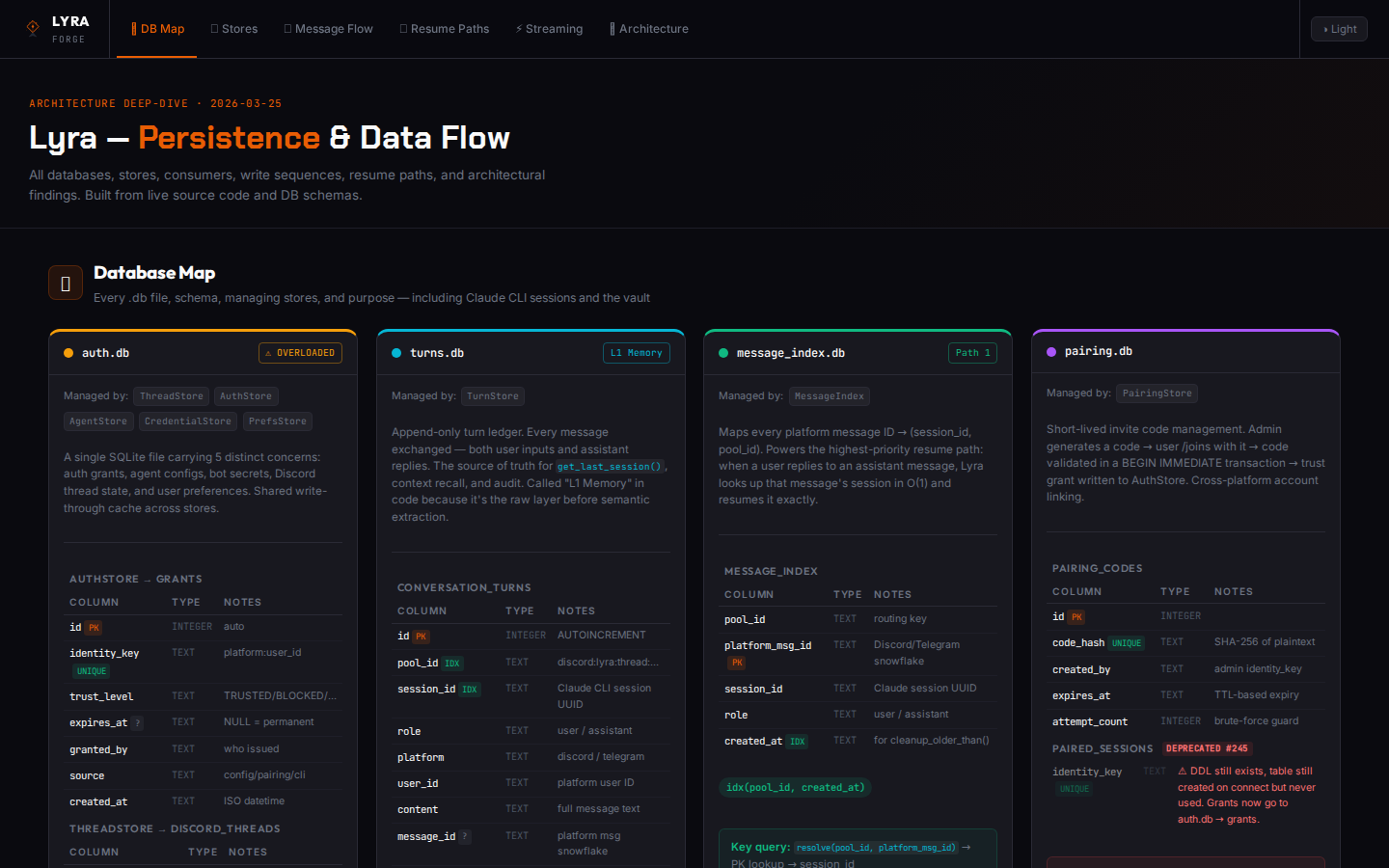
545 commits in 24 days. Hub-and-spoke, asyncio, hexagonal, streaming.
Product Decisions
Pivots, kill darlings, iteration speed. 52 days from first line to first user.
Lyra Architecture
Multi-agent, multi-channel, voice pipeline, memory. The platform under the hood.
Those talks told the what and the how. This one tells the journey — the real difficulties, the order they come in, and what we'd do differently.
"The hard part is the tech stack"
January. 1,200 commits on a boilerplate. You pick TanStack Start + NestJS + Drizzle + Better Auth. You think you've done the hard part. Then reality hits.
TanStack Start
React + Vinxi
NestJS
Fastify + Drizzle
Better Auth
RBAC + Multi-tenant
Paraglide
Compile-time i18n
shadcn/ui
Design system
GitHub Actions
CI/CD + Auto-merge
Vercel + Neon
Preview deploys
GDPR + Cookies
Consent management
Fumadocs
Documentation app
Playwright
E2E testing
Admin Panel
Users, orgs, audit
API Keys
Public API v1
Just the boilerplate. Not the product.
The tech stack is 20% choosing and 80% plumbing. But that's not where you'll struggle.
"The hard part is the tooling"
The tools you've used for years can't keep up. Linear, Jira, Confluence — incompatible with 50 commits per day. You migrate. Then you build.
Project bootstrap
roxabi-pluginsExtensions for Lyra & Claude
Skills for Lyra & Claude
Content generation
You're no longer developing a product. You're maintaining an ecosystem. And the tooling has become a project of its own.
What did we actually build?
Two tools that changed the way every project starts and gets explained.
$ /init
Bootstrapping project…
✓ Project ready — 9 steps, zero manual config
Plugin sync
$ rsync plugins → ~/.claude/
Update & synchronize skills across all Claude caches
Service management
To come?!
Vercel portless — deploy without leaving the terminal
You don't build tools because you want to. You build them because the alternative is doing the same thing by hand, every day, across 20 repos.
"The hard part is keeping up with the speed"
Lines changed per week
The two-track workflow
For the AI agent
analysis.md
spec.md
plan.md
For you, the decision-maker
Interactive HTML
Diagrams, dashboards, comparisons
Decision
GO / NO-GO
Rprod.
Remotion-based video production — talks, demos, animated explainers
Multiple seeds
Generate multiple examples with different seeds, pick the best
Speed is not an advantage if you lose visibility. And infra always ends up becoming a topic.
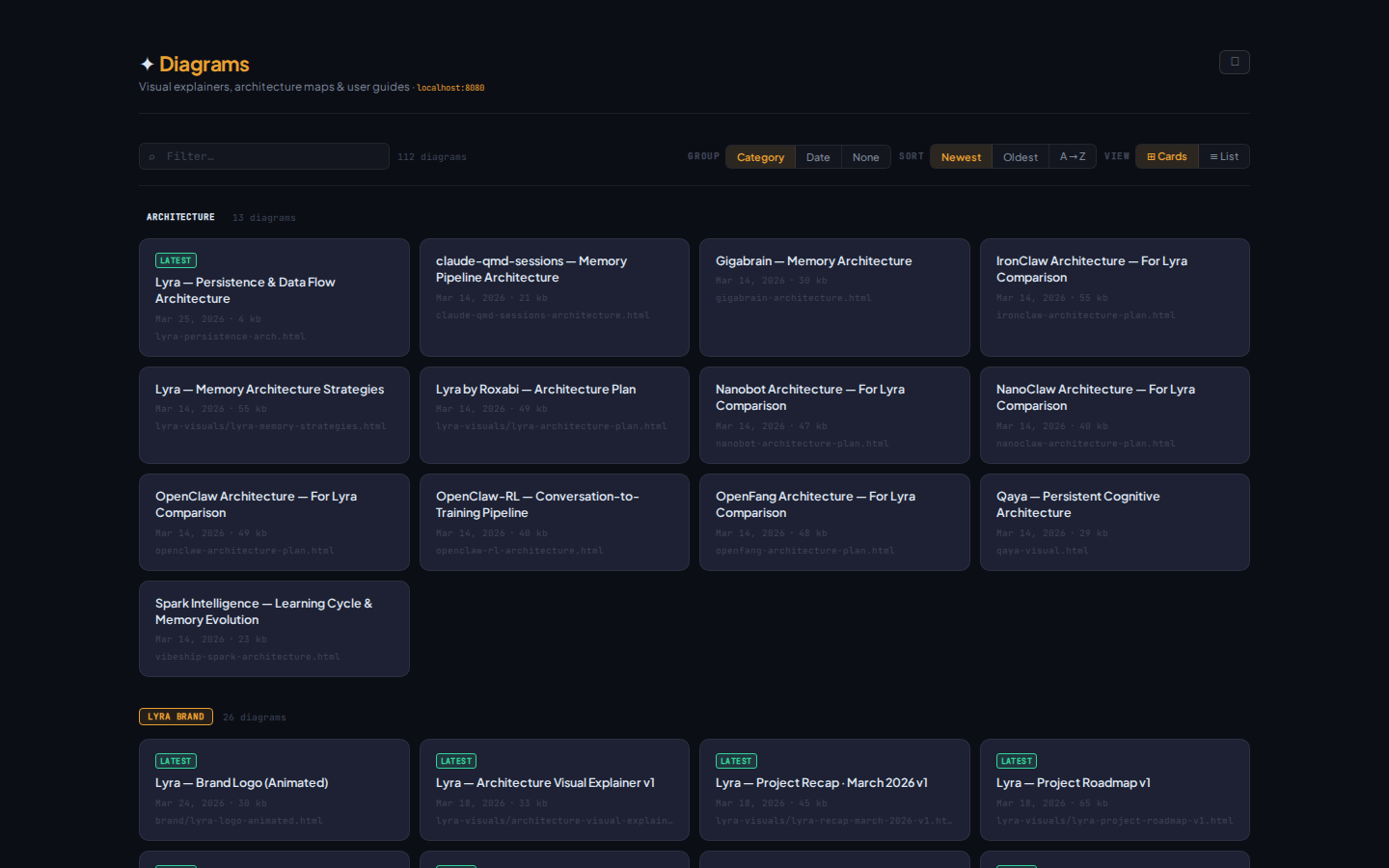
"make visuals" — your interactive library
$ make visuals
Scanning ~/.agent/diagrams/ …
hub-spoke.html
architecture
forgeflow.html
flow
mission-control.html
dashboard
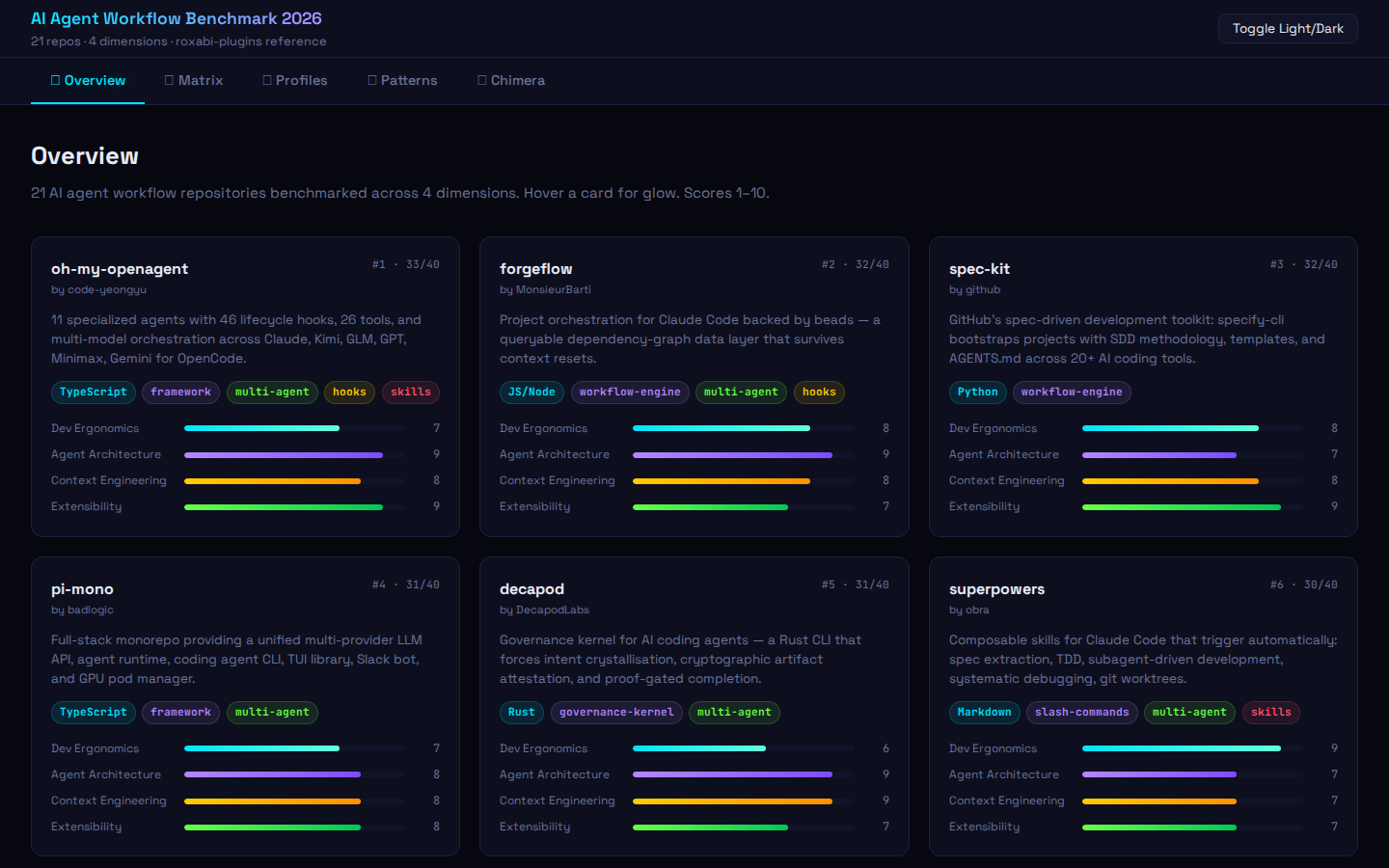
benchmark-2026.html
analysis
symphony.html
architecture
deploy-pipeline.html
infra
One guide for every diagram — the agent reads it before generating. Consistent output, zero manual setup.
Generate → compare → pick the best
#42
clean lines
#137
bold contrast
#256
warm tones
#512
selected ✓
#789
high detail
Same prompt, multiple seeds — variations let you select the best result without re-prompting.
Visibility scales when you standardize the output. A guide + a command = a visual factory.
Reverse engineer everything
You don't build in a vacuum. You scrape, benchmark, compare, steal patterns. The best ideas come from deconstructing what already works.
The first Lyra presentation video was a 4/10 on production quality. Solution: scrape 10 top YouTube tech presentations, extract the patterns that work — pacing, cuts, typography, hooks. Apply. Iterate.
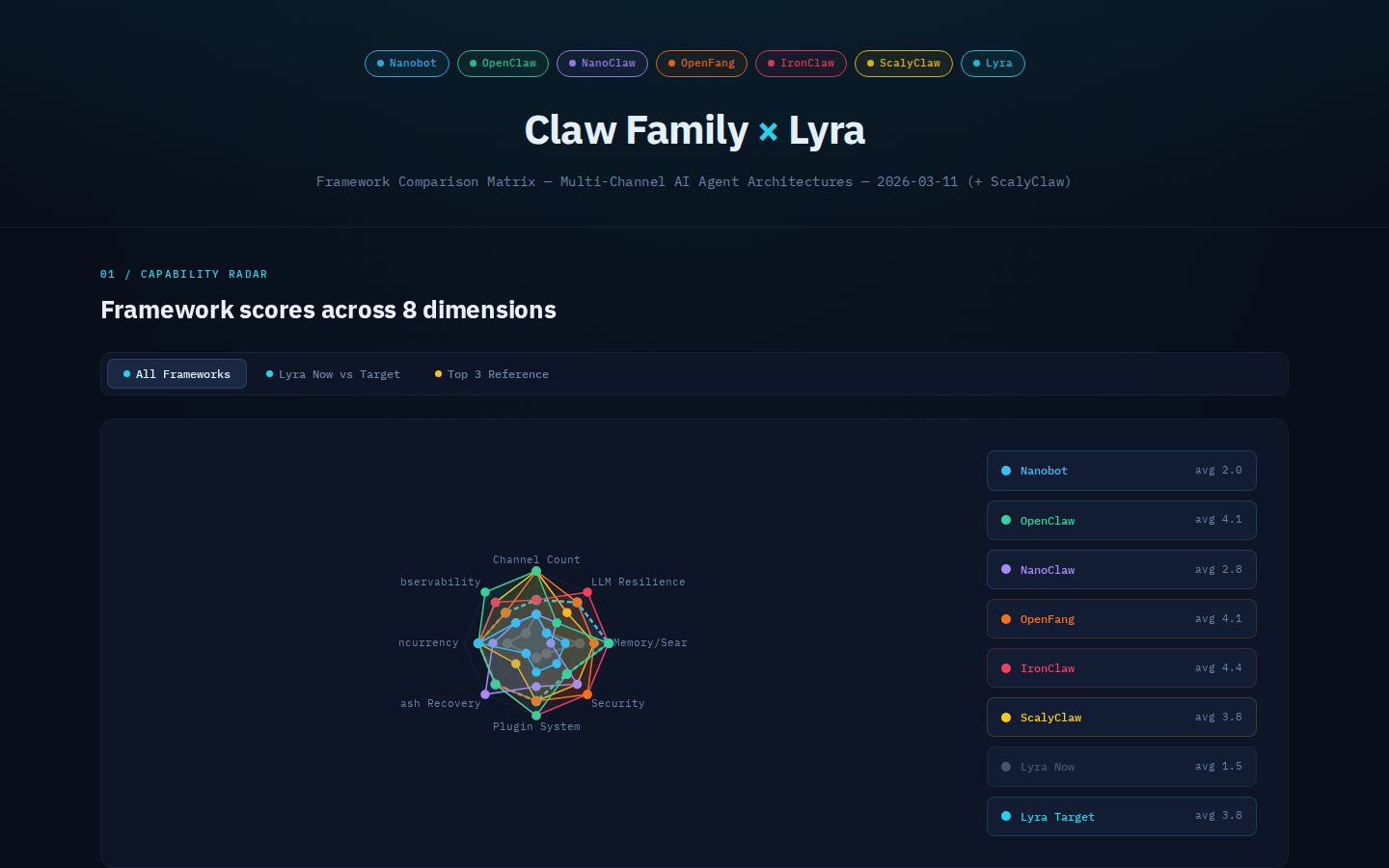
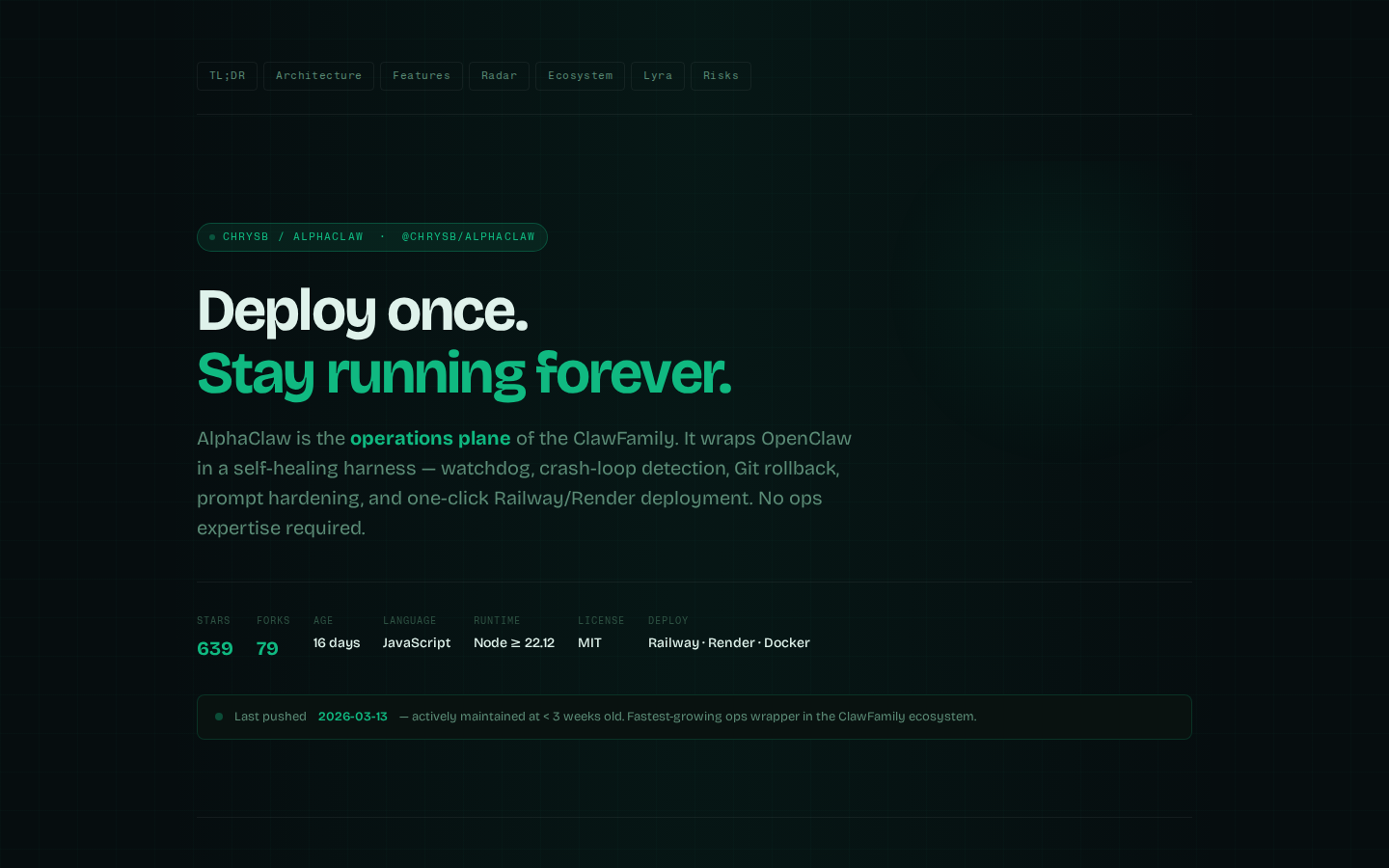
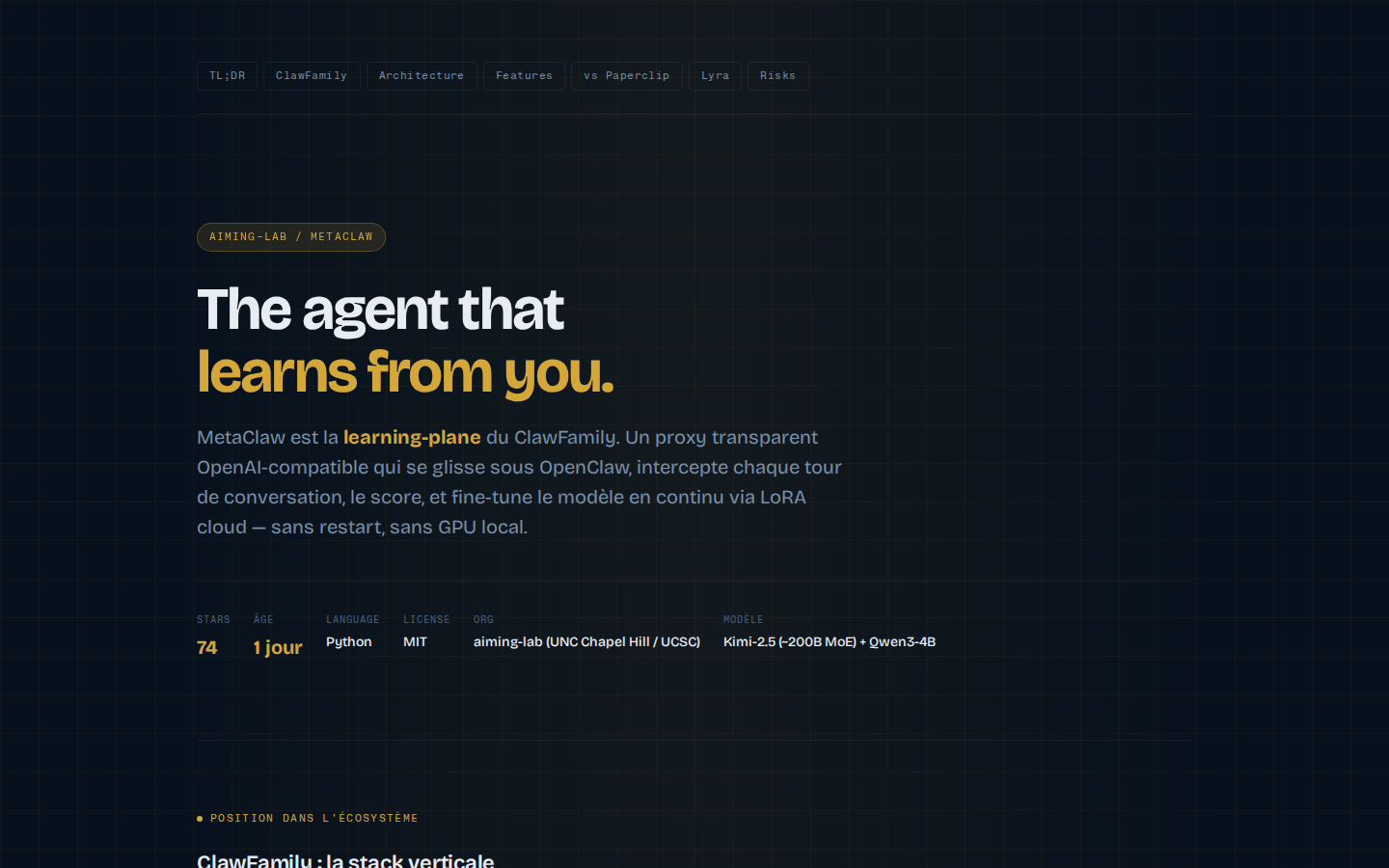
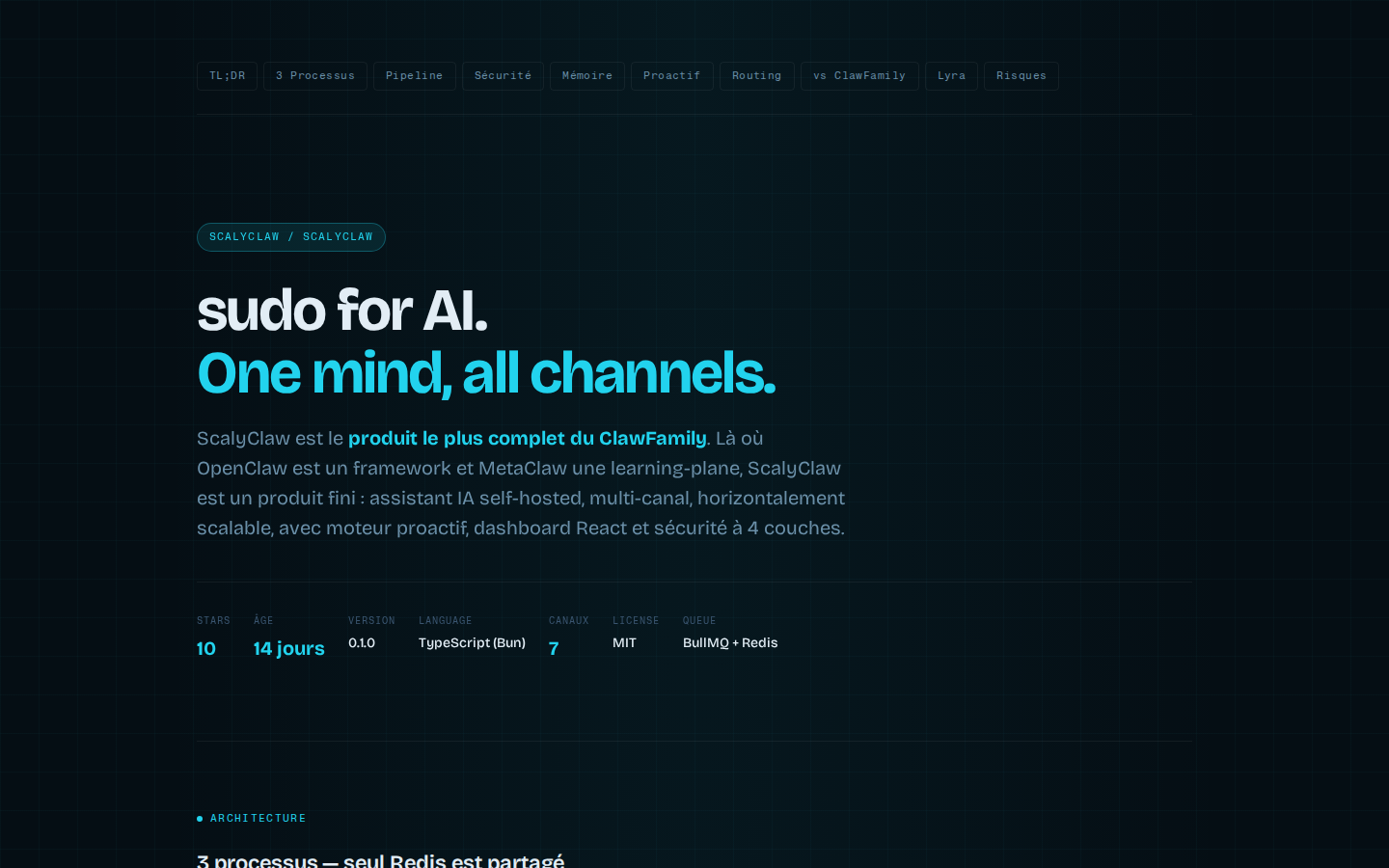
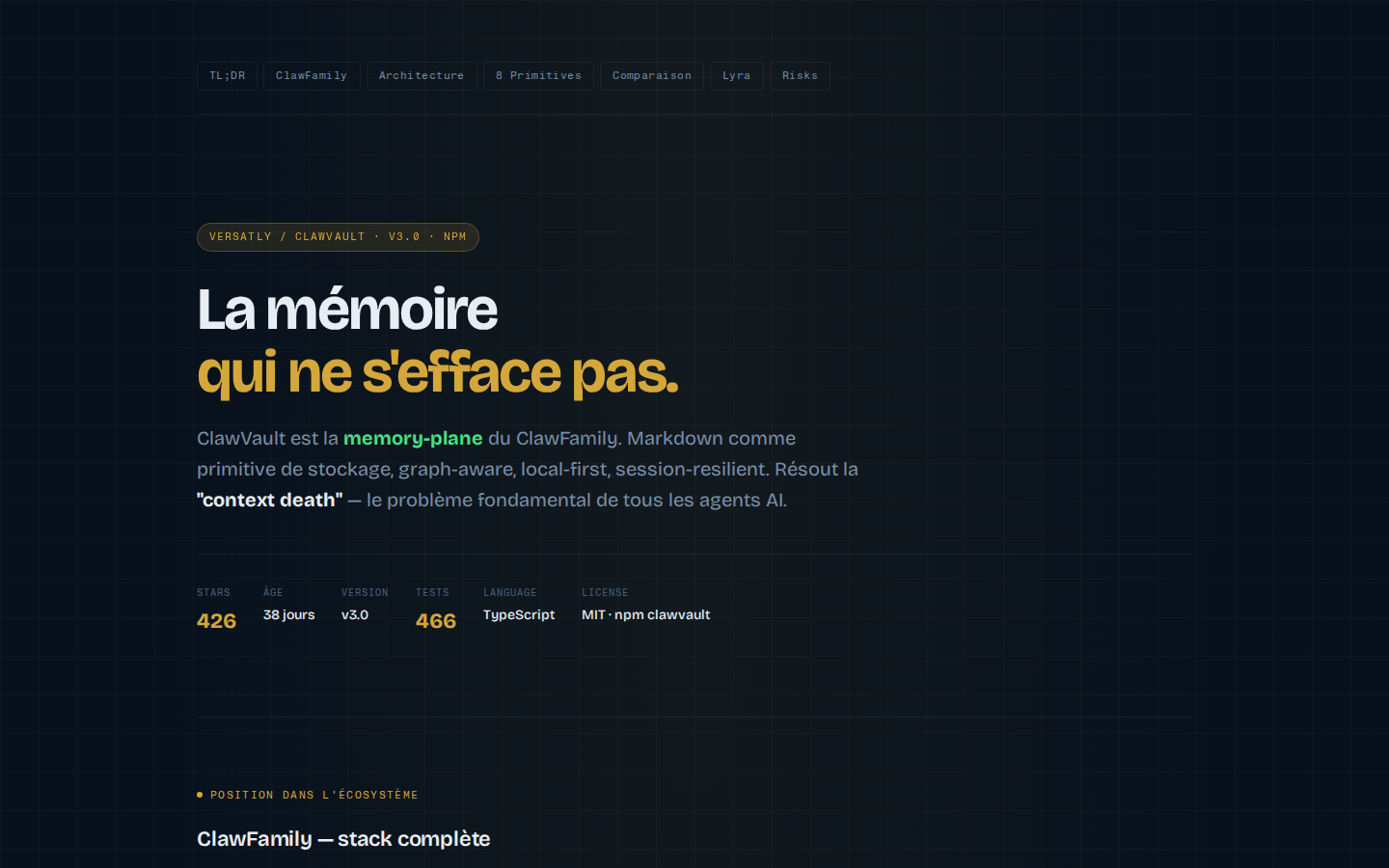
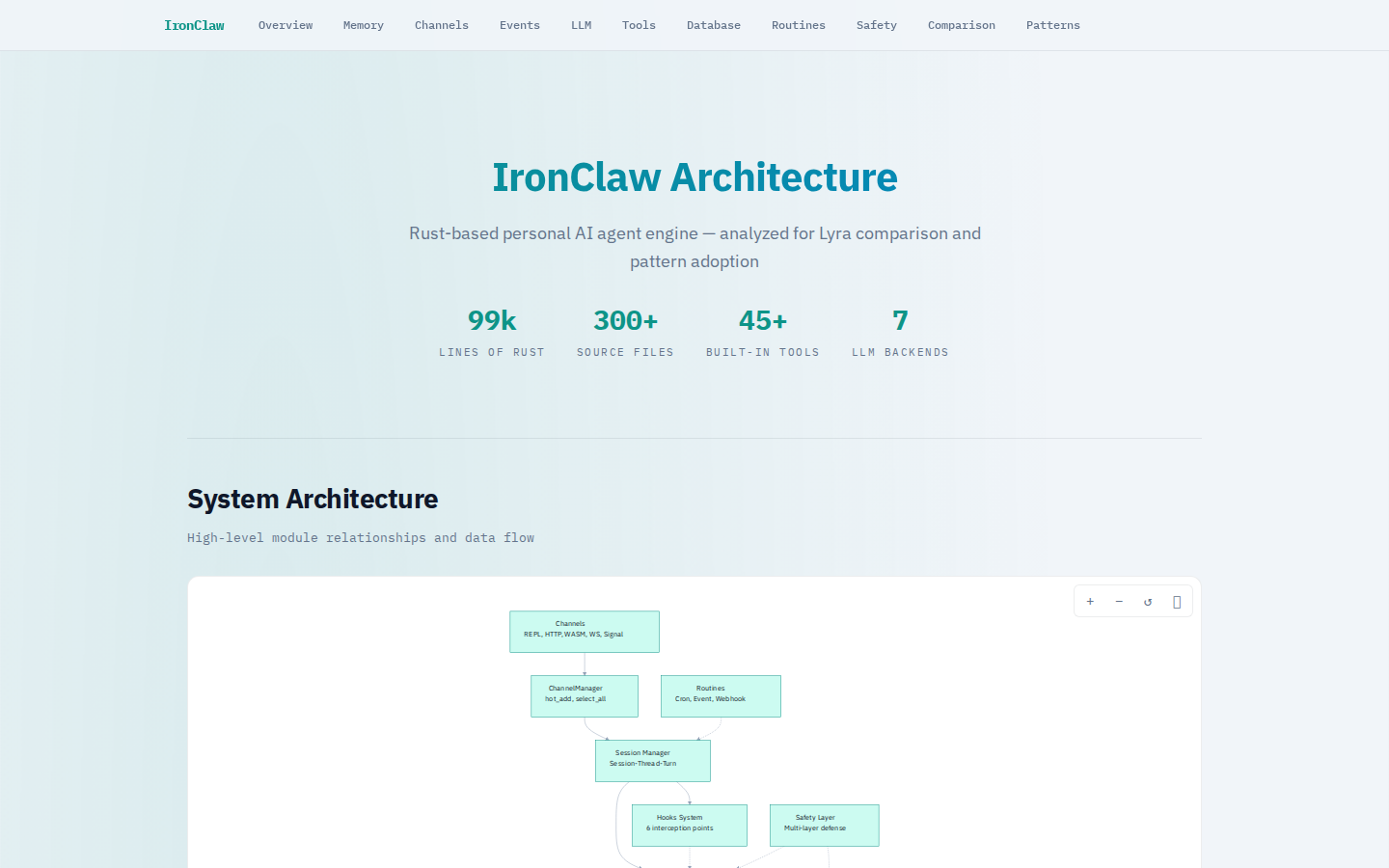
Lyra doesn't copy one agent framework — it borrows the best ideas from many. Each "claw" project is reverse-engineered to extract architectural patterns worth stealing.
The recon loop
01
Find 5–10 references in the wild
↓02
Scrape / analyze / deconstruct
↓03
Extract the patterns that work
↓04
Apply to your own context
The fastest way to get good isn't to invent — it's to study what already works, then adapt it.
breathe
"The hard part is the product"
Tech pulls you in. You're in build mode, solving concrete problems, seeing progress. And you realize you haven't done what's supposed to be your domain of expertise.
Not done
Actual order
1. Stack technique
2. Outillage
3. Vitesse
4. Produit ← ?!
Ideal order
1. Produit
2. Stack technique
3. Outillage
4. Vitesse
The step you should have done first is the one you do last. The PM who didn't do their PM work.
Don't lose the why
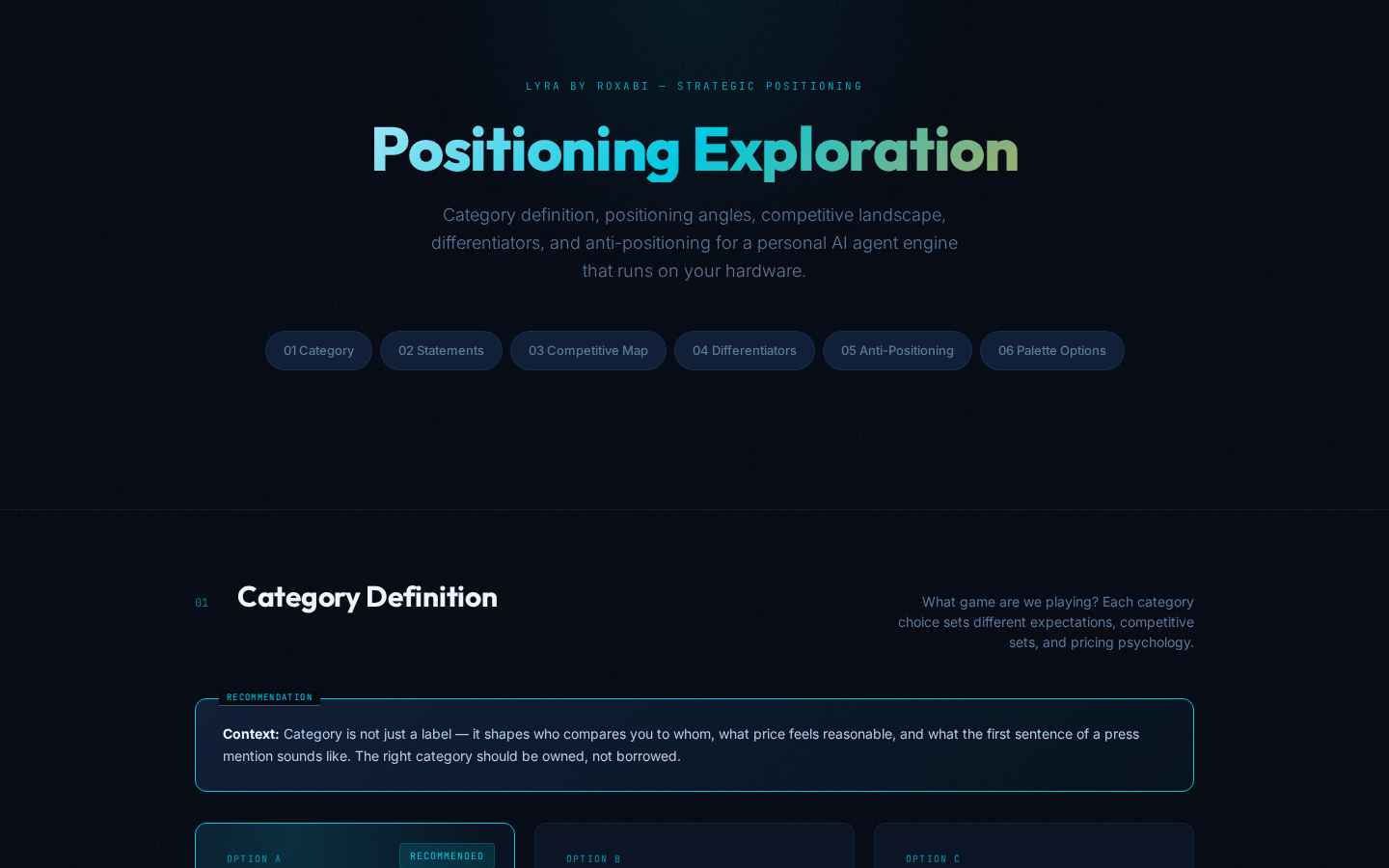
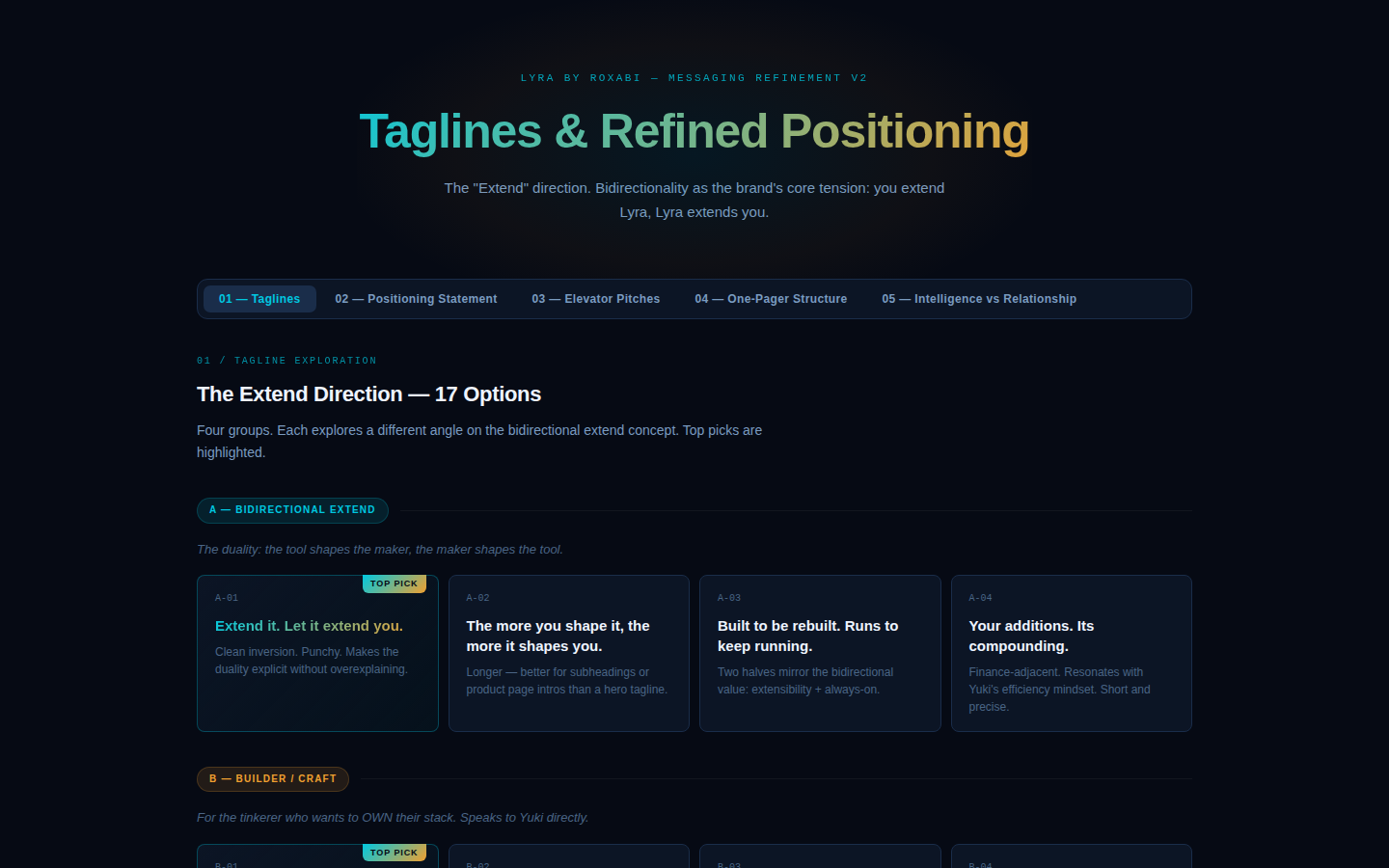
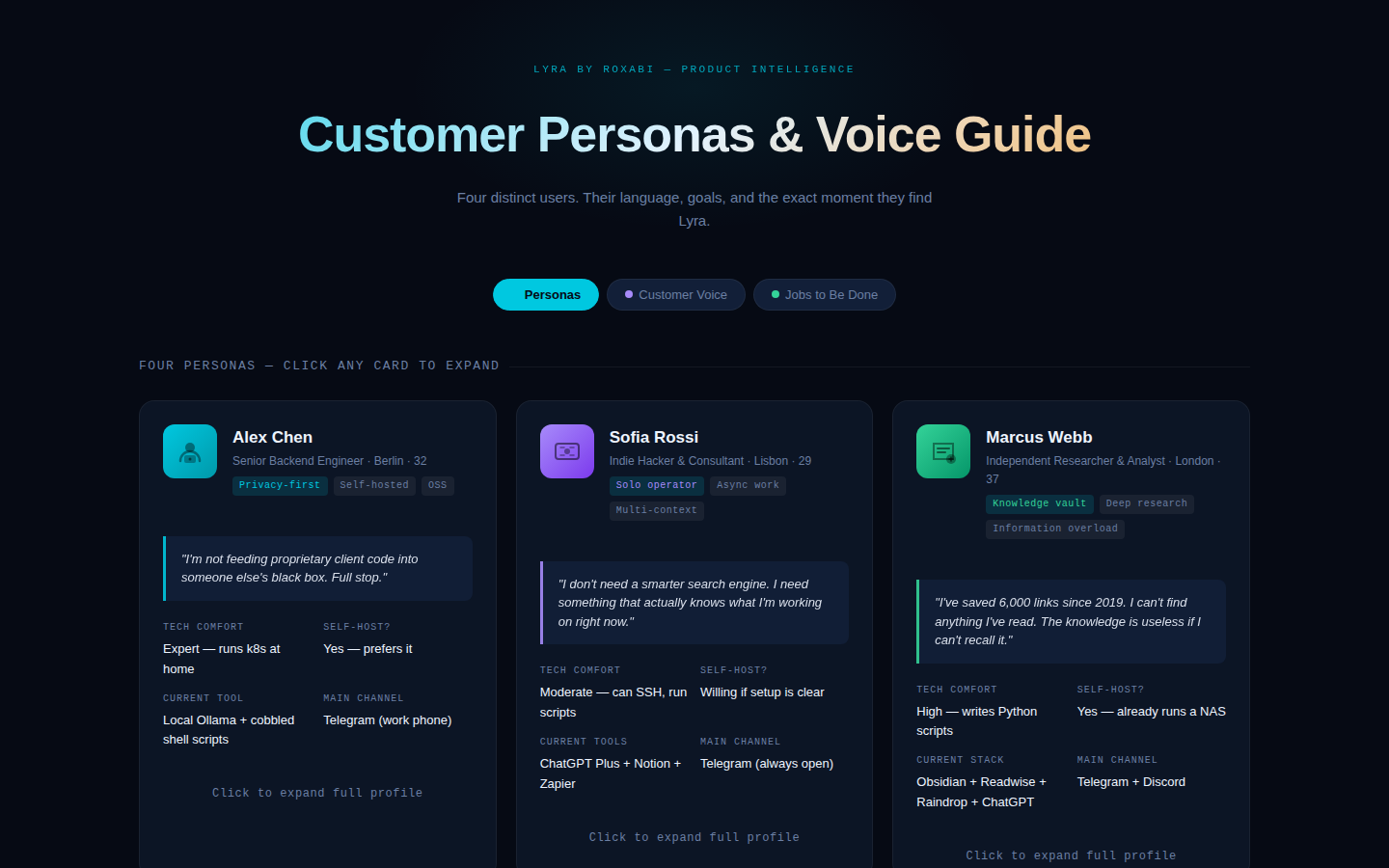
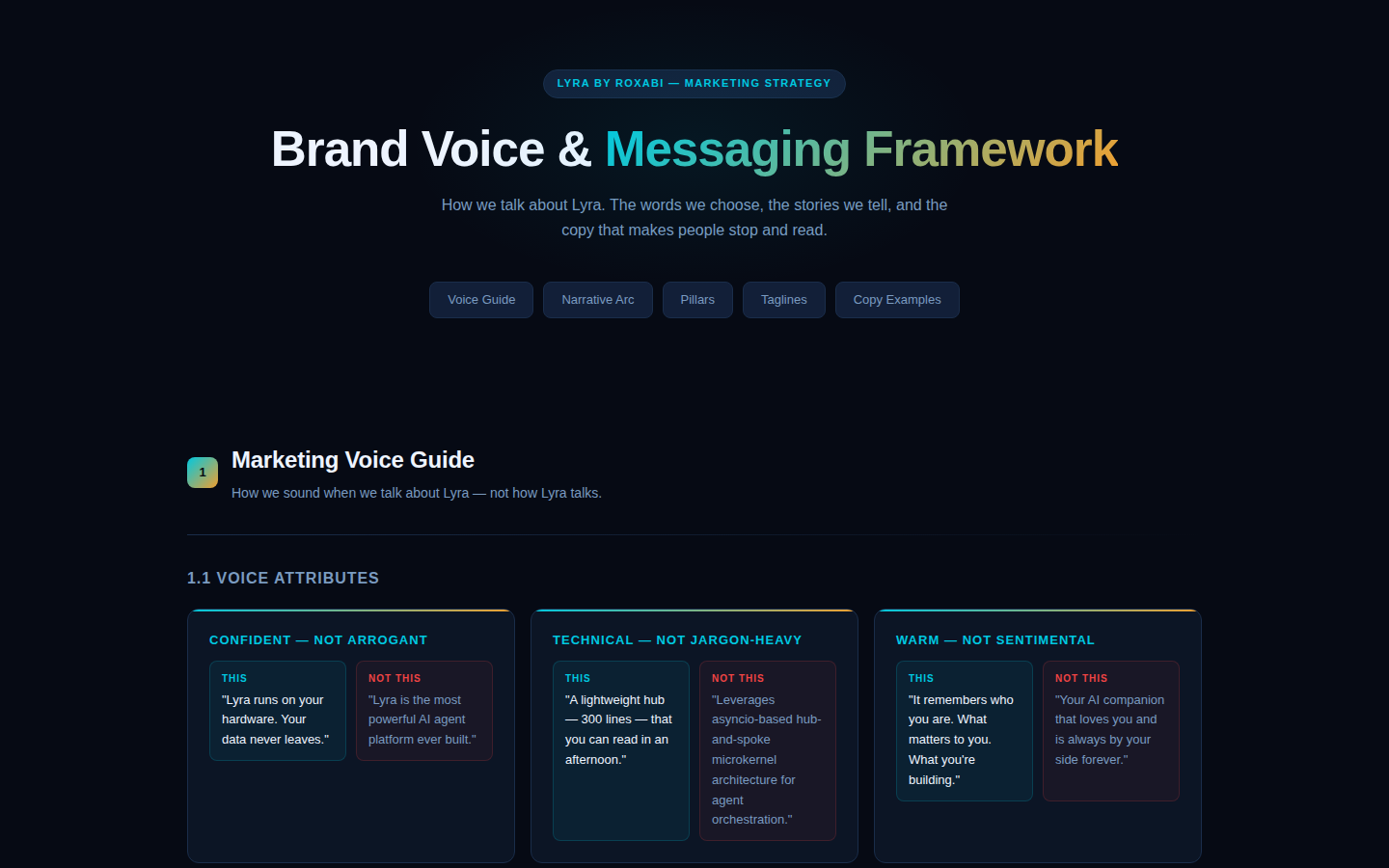
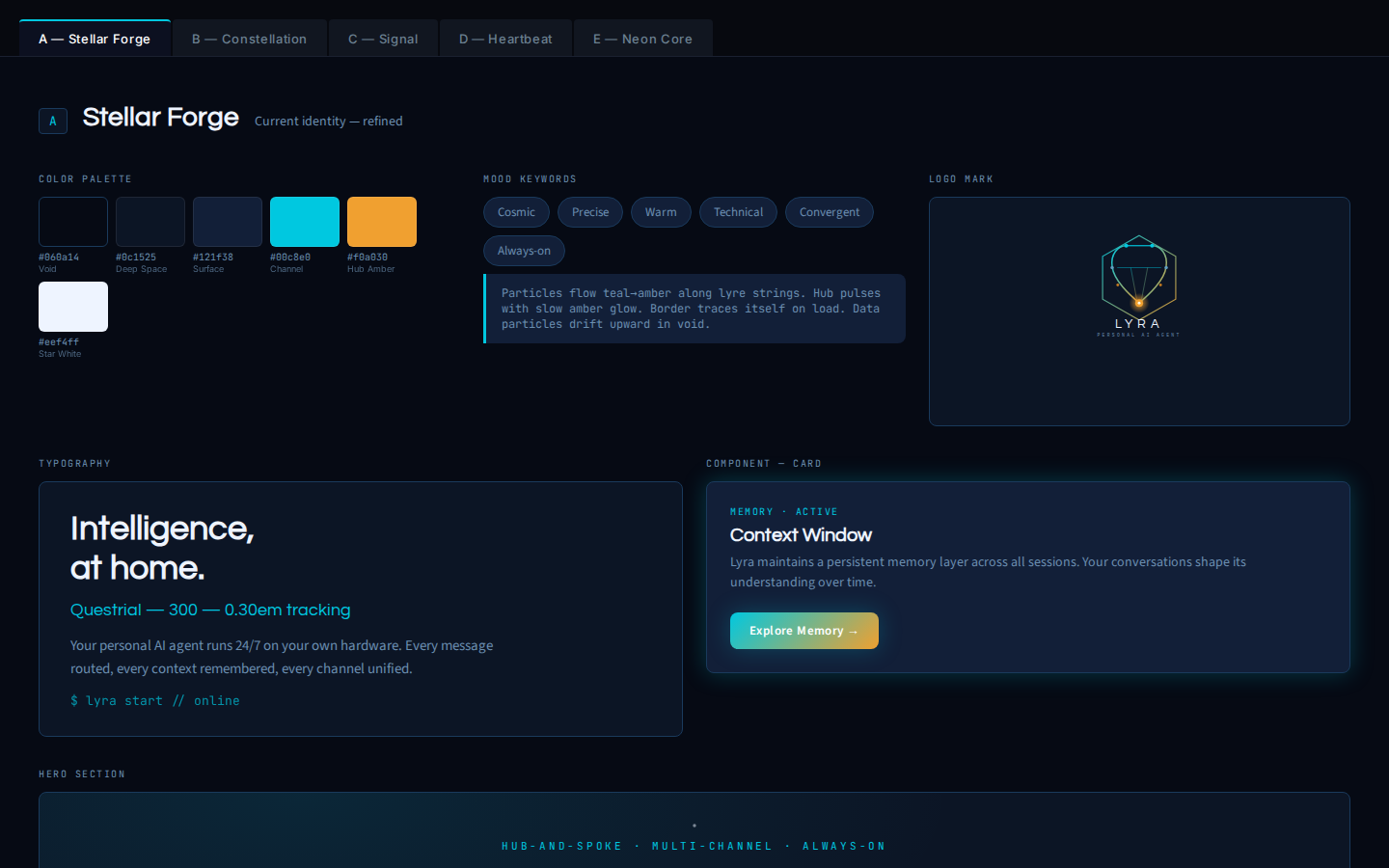
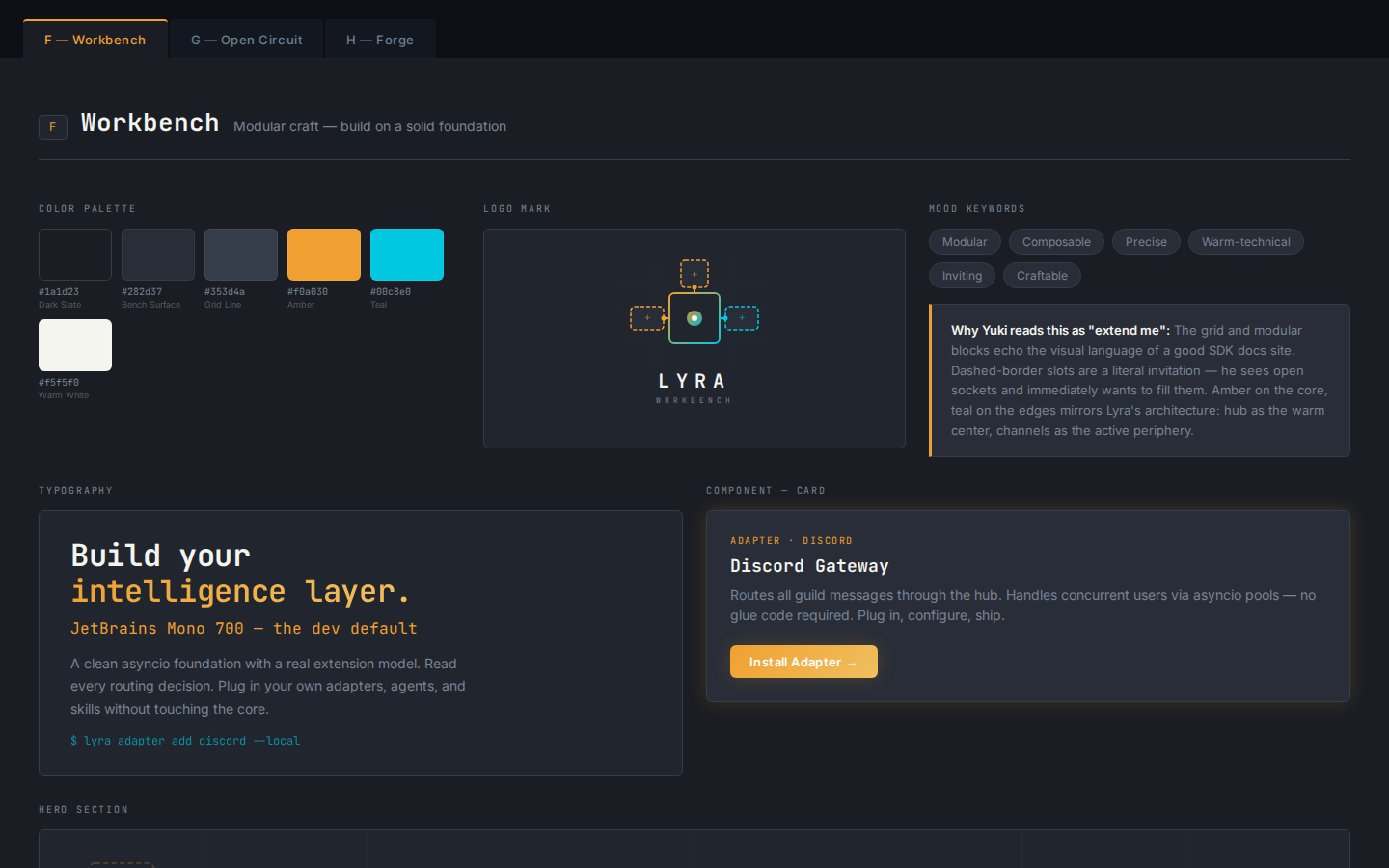
You need a playbook for brand, and methods for product. The question is when to use them — not whether.
Inventory everything before creating
Diverge — positioning, personas, visuals
Founder review, lock strategic pillars
Converge — voice, typography, messaging
Lock brand book, sign off
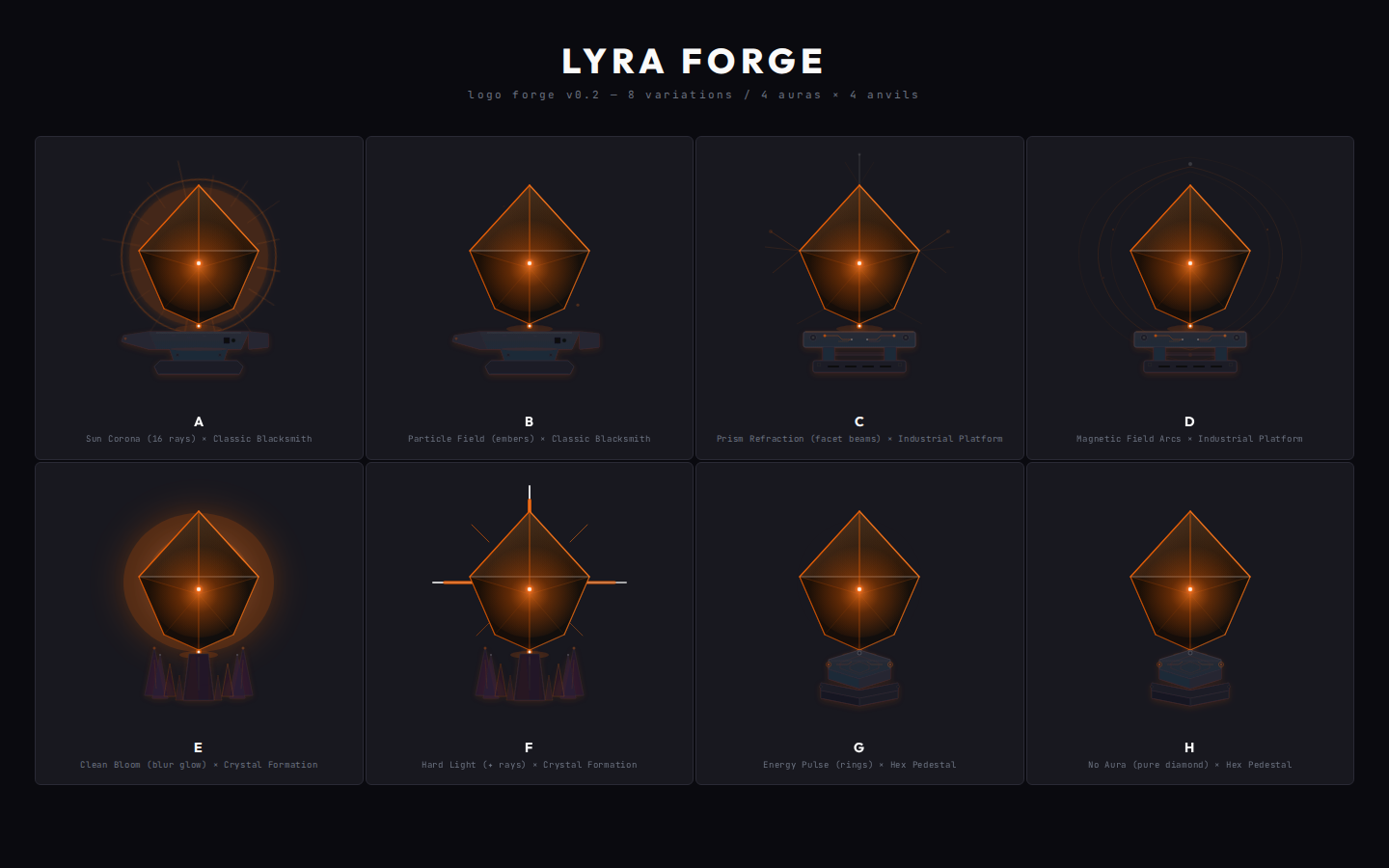
Logo, animation, handoff specs
Sub-variant funnel, kill list, polish
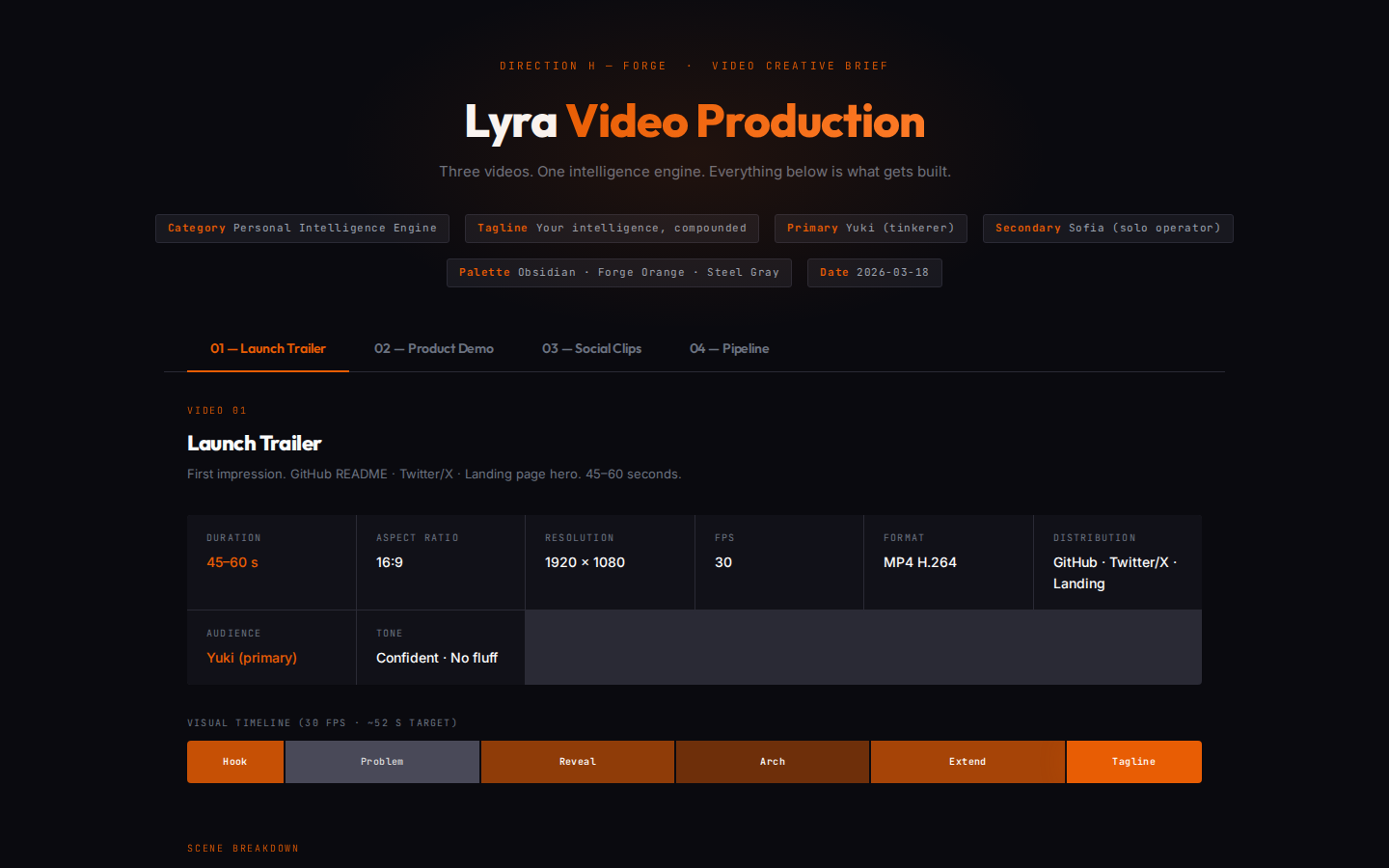
Brand video brief, Remotion pipeline
Agent-orchestrated, 4–8h of founder attention. Breadth first, then converge at decision gates.
Root-cause the real need
What job does the user hire this for?
Map the user journey before slicing
Why → Who → How → What
Must / Should / Could / Won't
Imagine it failed — why?
When to apply?
Frame → Before writing anything. Why are we doing this? For whom?
Spec → When slicing the solution. What's in, what's out?
Methods are not overhead. They're the cheapest insurance against building the wrong thing. The 5 Whys take 10 minutes — undoing a wrong feature takes weeks.
"The real hard part: steering without drifting"
The problem isn't building. It's keeping course. You spend long periods in tunnel mode. You don't step back. And you drift alongside the agent.
Altitude
Architecture, roadmap, prioritization
Detail
API, message format, edge case
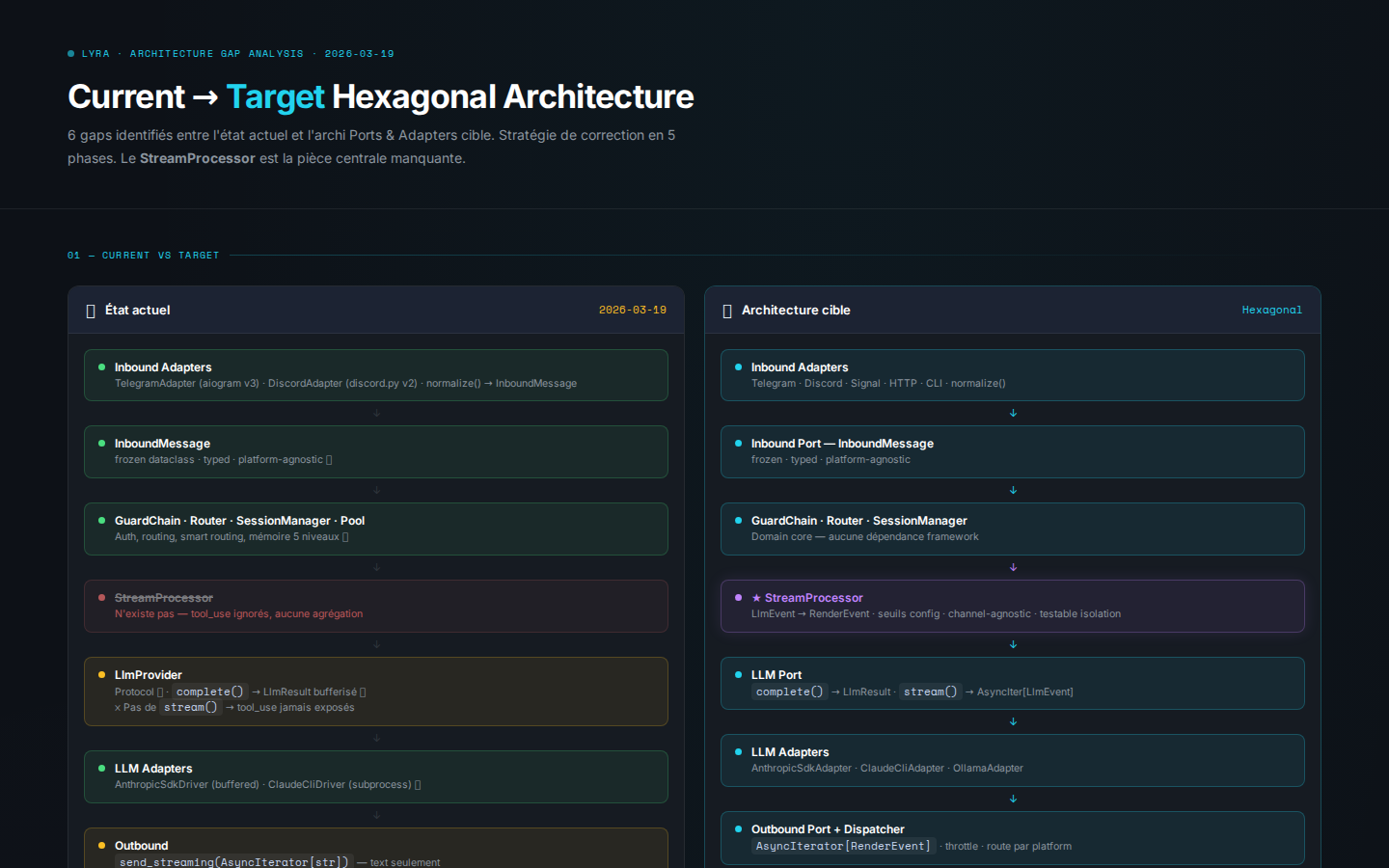
Lyra's hexagonal drift
W1–W3
W4–W6
W7–W9
You set up hexagonal architecture through your patterns
The agent introduces 'exceptions'. You don't see it.
Bugs pile up. Root cause: the architecture is no longer hexagonal.
You drift AT THE SAME TIME as the agent. Neither of you sees it.
You drift at the same time as the agent. That's the most dangerous part: neither of you sees it.
Recalibrate
Lyra refacto phases — real commits
core/ split into strict sub-directories
300-line cap enforced per file
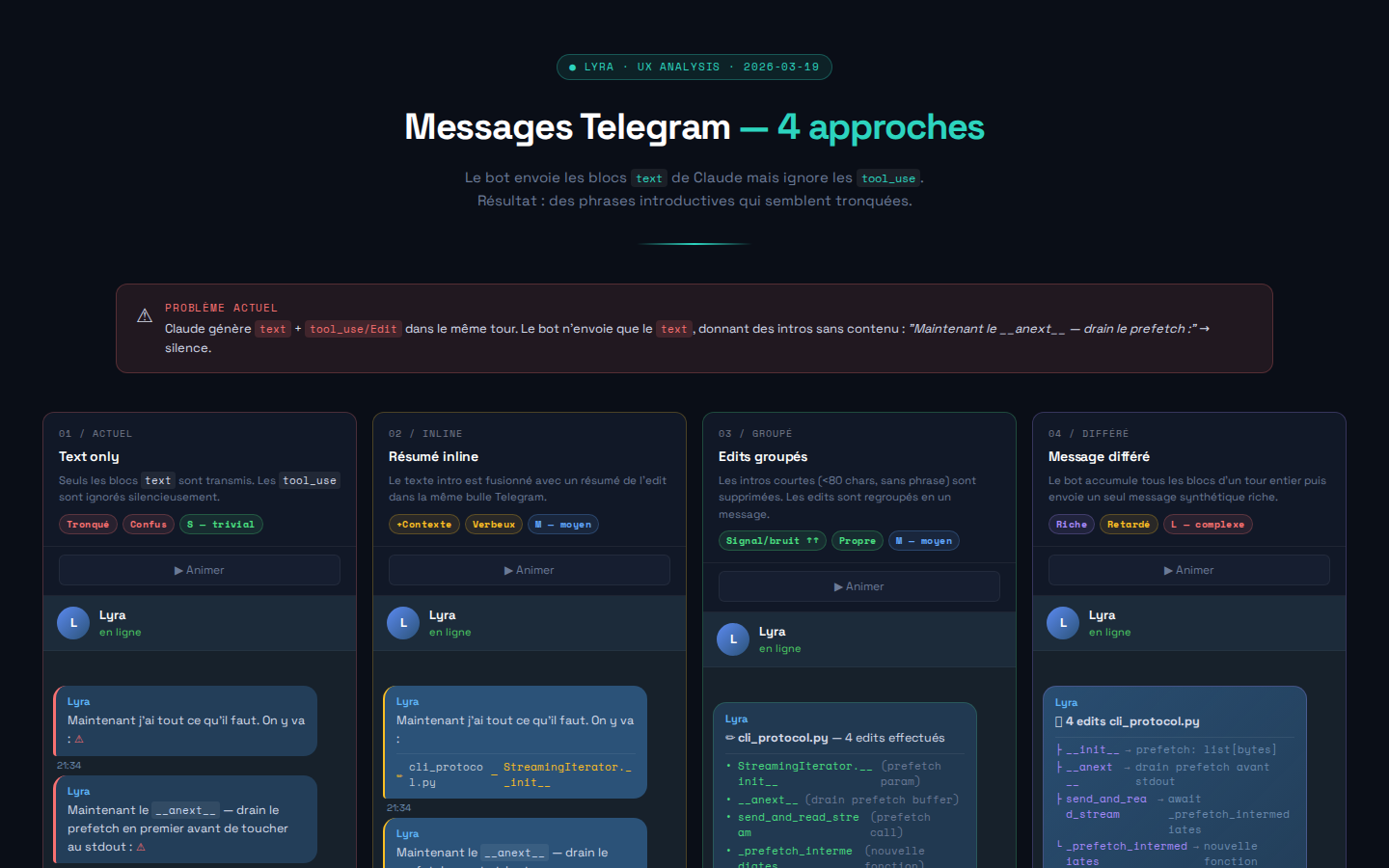
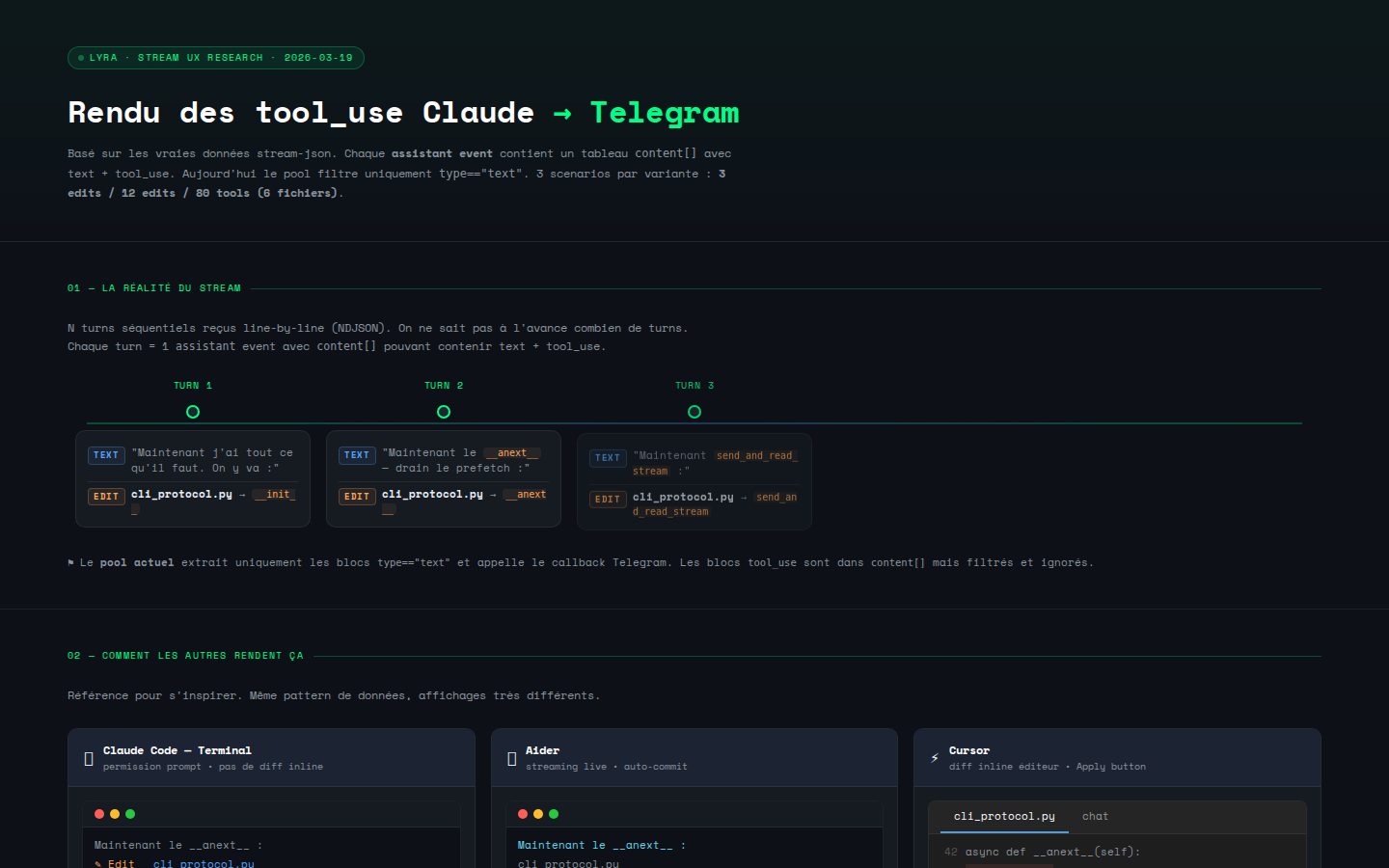
LlmEvent / RenderEvent / StreamProcessor rewrite
545 commits on Lyra in 24 days — nearly half is refactoring
50%
Features
50%
Refactoring
Automated guardrails
Agents don't drift if the linter catches them first. Strict rules are your cheapest steering tool.
The steering pyramid
If it's red here, everything else waits
Green pipeline = permission to ship
Review queue — don't let it pile up
New work enters here, not above
If it's red at the top, you unstack. Don't create new at the bottom.
If it's red at the top, you unstack. Don't pile new features on broken foundations.
Test your product. Now.
Fast development cycles are useless if you never put your product in front of real users. Ship early, break things, learn fast.
The fast cycle
Build the smallest thing that works
↓Ship it to real users
↓Watch what they actually do
↓Fix what matters, cut what doesn't
↻Good practices at speed
CI/CD from day 1
If it's not in prod, it doesn't exist. Automate deploy so shipping is free.
Feature flags, not branches
Ship dark. Toggle on for 10% of users. Watch. Decide.
Metrics before opinions
You don't know what users want. You think you do. Measure instead.
Kill your darlings
That feature you spent 3 days on? If nobody uses it, delete it.
The biggest waste isn't bugs or tech debt — it's building something nobody asked for.
What I'd do differently
Starting fast and iterating has its virtues. But the ideal sequence exists, and now I know it.
Before code
Product first
Personas, positioning, visual identity before the first line of code.
/init from day 1
Plan for plumbing. Use a standardized scaffold.
The .md / visual split from day 1
.md files for agents, HTML visuals for your decisions.
During build
Tooling = 30% of time
Every hour invested here saves ten later.
2 machines from the start
Never risk your dev env with a model that crashes.
The exploratory approach
Generate 10 variants, pick 3, iterate. The key is comparison.
Ongoing
Architecture checkpoints
A structural audit every 2-3 days.
The 50/50
Protect refactoring time. It's structural, not optional.
Steering dashboard
WIP limit applied to the ecosystem. Know when to unstack.
Agents are not algorithms
The next shift isn't technical. It's cultural. How we think about AI agents changes everything about how we work with them.
You expect deterministic output. You micromanage every line. When it makes a mistake, you feel betrayed. You treat the agent as an extension of yourself.
Give it a frame and an objective. Accept its output quality level. Don't verify every detail — manage like a leader manages a team.
The identity trap
When the agent is "you", criticism of its output feels personal. When the agent is a separate entity, feedback becomes constructive. This is the same dynamic as a manager whose team's work is critiqued.
"Does this agent, in this context, with this verification level, help me reach my objective?"
The cultural shift: from "AI as perfect tool" to "AI as managed collaborator". Not an algorithm. An entity.
Your intelligence, compounded.
I don't regret starting with the tech — it gave me velocity. But each phase taught me a lesson I could have learned earlier.
Mickael — Roxabi